Home > Education for SDGs

Education for SDGs

The Asian Institute of Technology supports the achievement of the Sustainable Development Goals by 2030 and the continuous sustainable development of Asia. The institute aligns with the SDGs through its teaching, community engagement, and operational practices.

The primary objective of AIT within the evolving context of Asia is to cultivate exceptionally skilled and dedicated professionals who will assume pivotal roles in facilitating the sustainable advancement of the region and its integration into the worldwide economy.
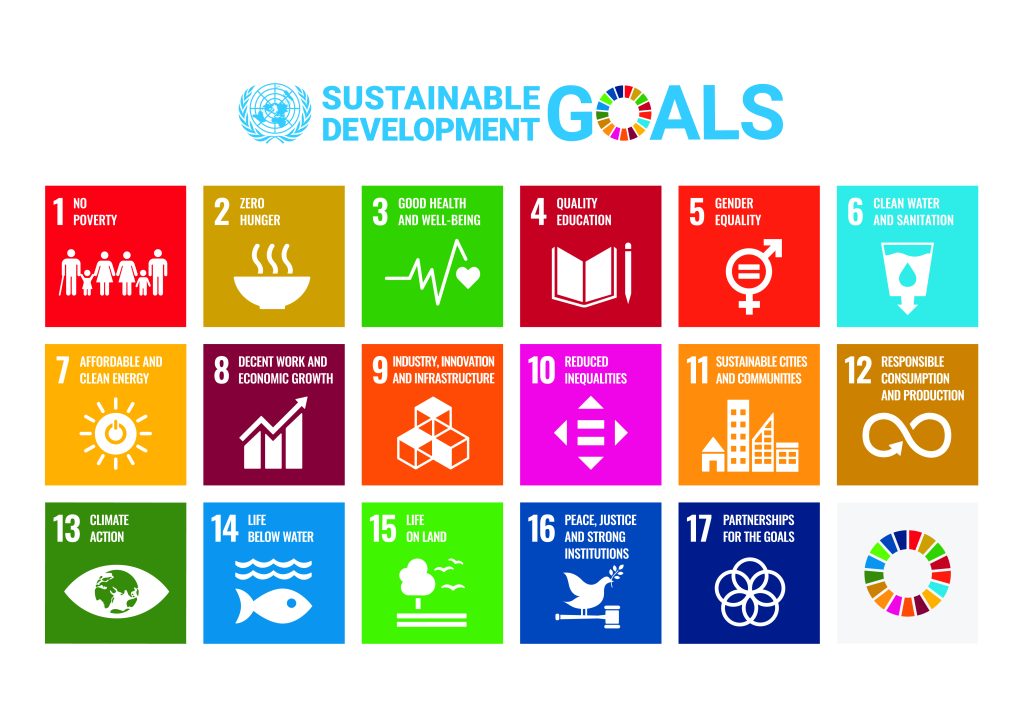
Our curriculum has direct application to the SDGs, and is integrated across the institute. A prime example is our School of Environment, Resources and Development which stresses meaningful education on SDGs by offering a broad range of academic programs designed to equip students with the knowledge and skills necessary to contribute to sustainability across sectors and professions.

The Department of Development and Sustainability employs an interdisciplinary approach to train and produce highly skilled professionals in the fields of Gender and Development Studies, Natural Resources Management, Regional Rural Development Planning, Urban Environmental Management, and Disaster Preparedness, Mitigation and Management.

As a technology-focused postgraduate institute, AIT recognizes that science, research, and innovation are key engines for tackling the complexity of today’s global challenges and making faster progress on the SDGs. AIT graduates commonly populate academia, governments, enterprises, international research institutions and non-governmental organizations, as well as international organizations such as the United Nations, World Bank, and the Asian Development Bank.

We also stress the importance of partnerships to accelerate social impact through active engagement with academic institutions, the private sector and civil society actors at local, national, regional and global levels, and by aligning our activities to ensure that the exchange of knowledge and best practices on SDG-related work also informs international level policy development.

AIT works in tandem with its partners to achieve the SDGs in Asian countries through joint capacity building, research, and consulting projects, and by implementing interventions in line with national development plans. We also encourage our students to get involved in social entrepreneurship and innovation outreach initiatives in line with our emphasis on supporting the SDGs.

The annual Sustainable Development Goals Fair organized by the Student Union, is a student-centered and transformative extracurricular program designed to empower young leaders – such as social development professionals and policy practitioners – to champion the SDGs and drive positive change in AIT students’ home countries and local communities.

For full masters and PhD courses visit the link below:
https://ait.ac.th/academics/programs/

Sustainability Course

AIT is committed to provide students with courses related to sustainability. AIT provides these
SNCourseSchoolRelated SDGsDescription
1Construction, Engineering and Infrastructure Management (CEIM)SETSDG 9: Industry, Innovation, and Infrastructure; SDG 11: Sustainable Cities and Communities; SDG 6: Clean Water and SanitationThe Construction, Engineering, and Infrastructure Management (CEIM) field of study prepares students to become effective managers and decision-makers familiar with the modern techniques of construction management, engineering management, and infrastructure management. It trains professionals to play a leading role in the international construction industry. It molds students to become active leaders in infrastructure development and management.
2Geotechnical and Earth Resources EngineeringSETSDG 12: Responsible Consumption and Production; SDG 15: Life on LandBesides the traditional topics of soil mechanics, foundation engineering, earth structures, underground excavations, land subsidence, and landslide mitigations, land reclamation, ground improvement, geosynthetics engineering, analytical and numerical analyses, geotechnical engineers and researchers are increasingly involved in many new and dynamic areas of geoengineering and geo exploration. They are also challenged to solve geoenvironmental problems, the reduction of construction wastes, clean-up of contaminated sites, geological-related hazards as well as onshore and offshore exploration and production of new mineral and energy resources.
3Bio-Nano Material Science and EngineeringSETSDG 3: Good Health and Well-being; SDG 12: Responsible Consumption and ProductionBio-Nano Material Science & Engineering” is a rational fusion of the disciplines of Nanotechnology and Bioengineering, which is truly interdisciplinary in nature and a unique program in AIT. It is an emerging field in science and technology developing innovative materials, devices, and processes, and creating wide range of opportunities encompassing physics, chemistry, biology, applied sciences, various engineering fields and biomedical technology. The program is designed to address the needs of future industry that require continuous development of their workforce and highly skilled leadership to direct and innovate research and development. It has a curriculum that is developed in collaboration with top researchers, industry experts and innovative educators that work in this field.
4Remote Sensing and Geographic Information SystemsSETSDG 13: Climate Action; SDG 15: Life on Land; SDG 11: Sustainable Cities and CommunitiesThe Remote Sensing & Geographic Information Systems (RS&GIS) Field of Study (FoS) at the Asian Institute of Technology (AIT) was established in 1990 offering doctoral, master’s, and post-graduate diplomas and certificate studies in Remote Sensing (RS) and Geographical Information System (GIS). Starting from a research program it has become a recognized education, training, and research program satisfying the need of the region for state-of-the-art technology.
5Water Engineering and ManagementSETSDG 6: Clean Water and Sanitation; SDG 13: Climate Action; SDG 14: Life Below WaterThe Water Engineering and Management (WEM) field imparts education and training toward an understanding of the complexity of water use and water resources management problems. It offers a balanced curriculum, which covers both the engineering and management aspects of water resource development. Students are trained to acquire knowledge and hands-on practice in tools and techniques to come up with viable and sustainable solutions within the framework of integrated water resources management at the river basin scale.
6Disaster Preparedness, Mitigation, and ManagementSETSDG 11: Sustainable Cities and Communities: SDG 13; Climate Action; SDG 3: Good Health and Well-beingDisaster Preparedness Mitigation and Management – recent intense occurrences of disasters all over the earth leading to massive loss of life and destruction of infrastructure have grabbed the attention of the world. Receiving less attention is disaster risk management – the know-how to prepare for such disasters and to reduce their effects. The academicians and practitioners at AIT, and its partner institutions are determined to contribute more toward bringing this know-how to disaster managers and engineers. The aim of this academic program is to instill the necessary interdisciplinary capacities to manage and minimize the effects of disasters in people on the front lines of disaster response and applicants with engineering, architecture, natural and social science, as well as management backgrounds.
7Agribusiness ManagementSERDSDG 2: Zero Hunger; SDG 12: Responsible Consumption and ProductionAgriculture plays a vital role in the economic development of a majority of developing countries. Moreover, agriculture is the provider of food and feed to the world. The agro-industries are also contributing to the growing industrialization of developing countries leading to the increasing importance of agri-products. The development of agribusinesses is also influenced by trade policies. Thus, the management of agribusinesses requires a holistic skill set to navigate challenges posed by the inherently unpredictable nature of agricultural products and government policies. Agribusiness management has far-reaching consequences for many sustainable development goals, including but not limited to SDG1 (no poverty), SDG2 (zero hunger), SDG3 (good health and well-being), SDG5 (gender equality), SDG6 (clean water and sanitation), SDG8 (decent work and economic growth), SDG9 (industry, innovation, and infrastructure), SDG12 (responsible consumption and production), SDG13 (climate action).Thus, there is a need for sustainable transformation of agro-food enterprises which requires a new breed of agribusiness managers.
8Agricultural Systems & EngineeringSERDSDG 2: Zero Hunger; SDG 12: Responsible Consumption and ProductionIn response to regional demand for professional training, two areas of specialization are offered: Agricultural Systems (AS) and Agricultural Engineering (AE). Students are trained to develop, adopt, and disseminate knowledge that focus on the utilization of technologies and management of biological and agricultural systems and natural resources. Both AS and AE are in a productive alliance to complement each other within the wide spectrum of activities being undertaken at Agricultural Systems and Engineering (ASE). The ASE places its emphasis on sustainable agricultural development based on a holistic understanding of agronomic and biophysical production factors, from the perspective of producers and the effects of economic and social forces on agricultural enterprises. It highlights the application of biological sciences, engineering, socio-economic policies and programs, and support services to agriculture to increase the efficiency of agricultural production systems through availability and efficient use of inputs and management of natural resources.
9Aquaculture and Aquatic Resources ManagementSERDSDG 14: Life Below Water; SDG 2: Zero HungerAARM is committed to improving regional institutional capacity in aquaculture and aquatic resources management and related fields through innovative approaches that integrate education, research, and outreach activities on sustainable management of fisheries, and aquaculture.Asia contributes over 90% of global aquaculture production and plays a key role in the development of appropriate cultural systems and technologies. Aquaculture production accounts for almost half of the world’s fish supply and increases by 10%. It is expected to surpass capture fisheries production in the next 10 years. Further development of aquaculture is also expected to help us move away from dependence on overexploited capture fisheries resources and to enhance and conserve aquatic habitats and biodiversity, but this expansion should not exceed the carrying capacity of water resources.
10Climate Change and Sustainable DevelopmentSERDSDG 13: Climate Action; SDG 15: Life on Land; SDG 11: Sustainable Cities and CommunitiesThe program is also tailored to conduct cutting-edge and solution-oriented research in climate change in an interdisciplinary setting. Our research focuses on low carbon and climate resilient communities, greenhouse gas accounting, technology needs, climate policy assessment, climate financing, disaster and risk management, impact and adaptation to climate change in water, land, agriculture, and their nexus.Science has said that the stabilization of global climate change is possible and we “can” substantially reduce the risks imposed by climate change. This requires new knowledge and consolidated actions. We thrive to develop next-generation climate leaders ready to take on these challenges and take-on new research frontiers to build a better knowledge base and facilitate actions.
11Environmental Engineering and ManagementSERDSDG 6: Clean Water and Sanitation; SDG 13: Climate ActionThis program has been developing solutions to environmental problems in the two focal areas of Environmental Technology and Management (ETM) and Water and Wastewater Engineering (WWE). ETM emphasizes as systems approach to manage the environment, considering the interrelated roles of industry and government agencies. Subjects covered included air pollution, solid waste, industrial pollution control, hazardous waste control and minimization, environmental impact assessment, and waste audits. WWE responds to the need to produce engineers who have specialized in the planning, design, operation and management of water supply, wastewater treatment, and disposal systems. Specializations includes water supply and sewerage system engineering, water quality management, water and wastewater treatment systems, environmental sanitation systems, waste recycling and resources recovery, and natural and ecological treatment systems.
12Food Engineering and Bioprocess TechnologySERDSDG 2: Zero Hunger; SDG 3: Good Health and Well-beingFood Engineering and Bioprocess Technology (FEBT) at AIT is a unique program as it combines engineering concepts with bioprocess technology for real-world applications. The program focuses on two major areas of specialization: Food Process Engineering and Bioprocess Technology. Food Process Engineering focuses on the application of engineering principles to the design of postharvest and food processing equipment; To impart knowledge on the modern concepts of sustainability and safety applied in food conversion. Understanding the entire product life cycle and its carbon footprint is a key to improve product quality and to enhance industrial production of food and biomaterials. This course provides the theoretical basis of sustainability and its application in various food processing operations.
13Marine Plastics AbatementSERDSDG 14: Life Below Water; SDG 12: Responsible Consumption and ProductionThe program will train a new generation of Asian environmental leaders to combat the ocean plastic litter problem through advanced technologies and sound management practices.Plastic pollution is one of the greatest problems affecting the marine environment today. A staggering 8 million tons of plastic ends up in the world’s oceans every year, according to the United Nations Environment Programme (UNEP). The top 6 countries in the world that discharge the most plastic debris into the ocean are in Asia, according to scientific research. The specialized MPA program seeks to empower young Asian practitioners, social entrepreneurs, officials and professionals who can play significant roles in marine plastic abatement, which is key for attaining Sustainable Development Goals (SDGs).
14Natural Resources ManagementSERDSDG 15: Life on Land; SDG 12: Responsible Consumption and ProductionNatural Resources Management (NRM) academic program is designed to train students in the fields of sustainable use and management of natural resources, community-based natural resources management, forest carbon accounting, biodiversity conservation, valuation of ecosystem services, economics of NRM, NRM and climate policy, technologies and sustainability, assessment of natural resources using conventional and modern temporal and geospatial technologies. NRM focuses teaching and research on both terrestrial and coastal resources and ecosystems from social and physical science perspectives. NRM also provides training, outreach and capacity-building opportunities and has assisted many universities in Nepal, Cambodia, Vietnam and more to develop their academic programs.
15Sustainable Energy TransitionSERDSDG 7: Affordable and Clean Energy; SDG 13: Climate ActionThis interdisciplinary program encompasses clean energy transition technologies, policy, environmental, social and management aspects. Graduates from this program will be able to address the challenges of energy transition, especially in the areas of low carbon electricity supply systems, reduction of energy intensity, and providing energy access to all physical and geographical areas.The main goal of this program is to prepare students to face the impending challenges in the global energy sector through strategic state of the art knowledge, tools and research skills to support technology, market, business, finance and policy development. This is expected to prepare them to deliver solutions-oriented knowledge and innovative practices for cleaner energy transitions for human progress.
16Urban Environmental ManagementSERDSDG 11: Sustainable Cities and Communities; SDG 13: Climate ActionUrban Environmental Management (UEM) academic program responds to the need to examine urban growth and environmental problems from the management and planning perspectives to contribute to the development of sustainable, inclusive, and resilient cities. We focus on understanding urban dynamics and developing effective interventions using various decision support systems and instruments in multi-stakeholder settings. Urban sustainable land use planning and management, Management of urban infrastructure and services, Environmental systems analysis and sustainability assessment, Water supply and sanitation management, Adaptation approaches to disaster risks and climate change, Sustainable and responsible tourism for development, Urban solid waste management and recycling, Urban development and information management systems.
17Urban Sustainability Planning and DesignSERDSDG 11: Sustainable Cities and Communities; SDG 9: Industry, Innovation, and InfrastructureThe Master’s program in Urban Sustainability Planning and Design aims to develop the expertise and leadership of professionals in urban planning and design with a strong emphasis on evaluation and application of sustainability. Through place-based and holistic approaches, the program covers urban systems planning and design for multi-scale (incl. metropolitan and building), cross-sector (e.g., ecology, energy, material and waste, water, climate, health, food, and mobility), and multi-agent decision making, in support of integrated, evolutionary and transformational change towards sustainability.The participants will acquire the knowledge and develop the necessary skills through applications with advanced technology and design tools for enhancing capacity, also in specific themes, e.g., ageing society, smart communities, healthy and inclusive cities, that are essential to sustainability planning and design processes relevant in the Asia-Pacific region and worldwide.
18Urban Innovation and SustainabilitySERDSDG 11: Sustainable Cities and Communities; SDG 9: Industry, Innovation, and InfrastructureUrban Innovation and Sustainability (UIS) program aims to enhance the capacity of professionals in coping with growing and complex urban needs, challenges and opportunities. Innovation refers to the development of new technologies such that they denote physical objects (e.g. products, services) and knowledge systems (e.g. methods, systems), and sustainability transition aims to meet socio-ecological system needs in ways that promote healthy ecosystems, human well-being, and viable economies. The program covers systems approach of multi-scale and cross-sector, and multi-agent connectivity and decision making. It also applies different methods of enhancing capacity, for emerging themes, e.g., ageing society, circular economy, smart buildings, responsible tourism and consumption, healthy and inclusive cities, etc.
19Development and SustainabilitySERDSDG 4: Quality Education and SDG 17: Partnerships for the Goals.To offer a generalist master’s program based on an interdisciplinary approach to international sustainable development. The aim is to build upon shared expertise in the Department of Development and Sustainability (DDS) and offering an academic program that has a broader scope than current academic offerings, which are very specialized. A broader and less specialized program will be especially attractive to institutions looking for managers with a broad knowledge of development issues, and candidates who may not want to narrow their academic and research skills but rather get a broader understanding of development issues in the region.The program also responds to the needs for capacity building regarding the United Nations Sustainable Development Goals (SDGs) in the Asian region and beyond in ways these other programs do not since the concept of sustainability calls for expertise in both the environmental and social dimensions of long-term development.
20Gender and Development studiesSERDSDG 5: Gender Equality and SDG 10: Reduced Inequalities.Gender and Development Studies (GDS) develops scholars, analysts and practitioners who can integrate gender approaches in to development planning and management, and conduct original gender and development-related research for advancing development goals, including the Sustainable Development Goals, globally and in Asia. As an academic arm of community-based efforts for gender equality and for the advancement of rights and inclusion of women and individuals of all sexual orientation and gender identity expression, GDS aims to be a center of excellence in gender and development studies by integrating gender equality as a key intellectual perspective and ethical concern in sustainable development.
21Science of Climate Change and ImpactsSERDSDG 13: Climate Action;Earth’s climate is changing in ways that affect our weather, oceans, snow, ice, ecosystems, and society. Climate change has been described as the largest environmental issue facing humanity, and one of the most critical issues of any kind confronting us in terms of planetary ‘management’. There is an urgent need to better understand how the science, social science, policy and management issues associated with climate change can be integrated and handled more effectively. This course seeks to first lay down the fundamental scientific principles behind climate change. The aim of this course is to provide the students with a framework to enhance the understanding of these issues.
22Climate Compatible and Sustainable Infrastructure DevelopmentSERDSDG 9: Industry, Innovation, and Infrastructure and SDG 13: Climate Action.In view of the importance and challenges of developing and managing sustainable infrastructure in the globe including Asia, this course is designed to provide a graduate level understanding of the planning, assessment and implementation of various types of infrastructure development. The relationships of infrastructure elements and functions with climate change will be a focus of this course – including their contributions to and impacts from climate change.
23Land Use and Climate ChangeSERDSDG 13: Climate Action, SDG 15: Life on Land, and SDG 2: Zero Hunger.Land use being one of the major causes of climate change and the fact that enormous land use change, the issue is of high concern due to important role of land use on food security and ecosystem services. The objective of this course is to provide students the knowledge about land use change and its processes, impact on climate change and vice versa, and potentials of land uses for mitigation and adaptation. The course specifically focuses on agriculture, forestry and other land use sectors.
24Climate Change Impacts, Vulnerability and Adaptation: Concepts, Tools and PracticesSERDSDG 13: Climate Action;This course provides a brief introduction on climate change science, details the concepts of and methods to climate change impacts, vulnerability and adaptation assessment. Furthermore the course provides the hands-on exercise on using selected tools and techniques to assess the impacts and vulnerability and design and implementation of adaptation strategies for natural and managed resources and systems, and their use (water, agriculture, ecosystems).
25Climate Change MitigationSERDSDG 13: Climate Action.Climate change mitigation activities are designed to reduce greenhouse emissions and/or increase the greenhouse gases removal from the atmosphere by greenhouse sinks. This course is designed to expose the students to the climate change mitigation theories, practices and options with more focus on the mitigation actions at individual, national and global levels. The course will provide a critical and multidisciplinary overview of strategies for climate change mitigation by focusing on the technical feasibility and effectiveness of different mitigation options in sectors such as energy systems, transport, buildings, industry, agriculture and land based systems. The subject will discuss the criteria and considerations for evaluating climate change mitigation.
26Economics of Climate ChangeSERDSDG 13: Climate Action and SDG 8: Decent Work and Economic Growth.Economics is at the heart of the climate change debates, discussions, policies and actions. It also provides tools and basis for choice of actions and policy instruments. Therefore, the objective of this course is to provide a sound understanding of the economics of climate change from multiple viewpoints needed for graduate students specializing in climate change. These viewpoints span from the economic underpinnings of global climate agreements and global costs and benefits as key tenants of climate policy to the cost-benefits analysis as a tool for analyzing projects and policy instruments. The course also provides an opportunity to make students aware of the limitations of the economic approach, valuation difficulties, uncertainly of impacts and other ambiguities which are inherent in the climate change.
27Climate Change Adaptation and Disaster RiskSERDSDG 13: Climate Action.The impact of climate change are apparent through the manifestation of extreme events. Building resilience and the capacity to adapt to climate change promotes flexibility, learning and protection of ecosystems as well as direct social and environmental benefits. Integrated climate change mitigation efforts are required in various sectors in order to minimize the risk of climate change and associated disasters. The course will provide the students with an understanding of the key concepts and impacts of climate change and issues associated with vulnerability, adaptation and resilience. The objective of this course is to provide students with a sound knowledge on emerging issues and viewpoints confronting recent trend on Climate Change Adaptation and Disaster Risk management.
28Adaptation to Climate Change: Policies and PracticesSERDSDG 13: Climate Action.The main objective of the course is to make students understand the key challenges to adaptation to climate change. It deals with the concepts and types of adaptation, technological challenges, the role of governments, NGOs, civil society and international organizations in promoting adaptation.
29Energy Access in Rural and Isolated AreasSERDSDG 7: Affordable and Clean Energy; SDG 13: Climate ActionExplain the SDG 7 goal and 7.1 targets and status. Expound energy consumption and energy supply in rural and isolated areas Explain the sustainability issues (social, economic and environmental) due to energy access. Design a solar home system using PV and explain the influences of factors on PV cell/module outputs observed from experiments Design clean cooking systems and explain the influences of factors on its performance based on experiments. Evaluate and design of electricity supply and clean cooking systems using software
30Smart Energy BuildingsSERDSDG 7: Affordable and Clean Energy and SDG 11: Sustainable Cities and Communities. Identify and assess the energy requirements in buildings Explain the characteristics of smart buildings Analyze the components including sensors and IoTs and systems involved in smart buildings Apply AI, Big data engineering and Analytics for efficient energy management of buildings
31Energy and GHG Emissions Accounting and Modelling in CitiesSERDSDG 11: Sustainable Cities and Communities and SDG 13: Climate Action.Deliberate on the trends, patterns, and hotspots of energy use and GHG emissions in cities and the related policies and options at multiple scales Quantify and evaluate past and present energy usage in cities and related GHG emissions following well-established global protocols Develop future scenarios and model these to evaluate the technological and policy options and pathways for the sustainable urban energy transition.
31Economics of Clean Energy TransitionSERDSDG 7: Affordable and Clean Energy and SDG 13: Climate Action.Deliberate on the trends and patterns of ongoing energy transition and future trends Develop scenarios and elaborate the appropriate modelling methods for clean energy transition visioning and pathway analysis Evaluate the costs of emerging technologies and interventions towards clean energy future Conduct impact analysis of clean energy transitions
32Energy Technology, Transition and SustainabilitySERDSDG 7: Affordable and Clean Energy and SDG 13: Climate Action.Explain the renewable energy (solar, biomass, wind, hydro and geothermal) resource availability, conversion (technologies) and applications, also with fossil fuel (coal, oil and natural gas) origin, extraction and conversion and the status of their utilization. the urgency and enabling conditions for transition in the context of Paris goal and connected challenges, and explain the multidimensionality of energy transition Apply methods to calculate the total economic value in project design with examples from various countries
34Business Analytics and Digital TransformationSOMSDG 9: Industry, Innovation, and Infrastructure; SDG 8: Decent Work and Economic GrowthThe M/MSc BADT is designed to give students the skills and knowledge to use business analytics and an awareness of technological changes to become a driv- er for business change and a catalyst for successful digital transformation. This program focuses more on the application and interpretation of business analyt- ics rather than expertise in programming and statistical analysis.The number of data science and analytics jobs is projected to grow by nearly 364,000 listings to approximately 2,720,000 (18%) in the next several years. Those most prepared to compete for these positions will need advanced educa- tion, 39% of data scientists and advanced analyst positions require a Master’s or Ph.D.
35Banking and Finance – Professional MastersSOMSDG 8: Decent Work and Economic Growth; SDG 10: Reduced InequalitiesPMBF helps emerging industry leaders cultivate a strategic mindset to meet current and emerging challenges arising from the fast-changing business and technological environment in the banking and finance industry. The program will help participants acquire knowledge and tools to decode and respond strategically to significant changes in the economic and social environment, analyze and design new business models to gain a competitive edge, identify emerging revenue streams analyzing the role of partnerships in value creation for customers anticipate and respond to evolving regulations and exploit the potential of technology to enhance the competitiveness of business.
36International Finance – MScSOMSDG 8: Decent Work and Economic Growth; SDG 10: Reduced InequalitiesA Master’s in International Finance is designed for those wanting to work in dynamic financial markets, and will be taught by both academics and financial market practitioners. It is designed to provide graduates with the underlying theoretical knowledge, as well as the practical skills, to apply these concepts.
37Masters in Business AdministrationSOMSDG 4: Quality Education and SDG 8: Decent Work and Economic Growth.SOM offers one of the top-ranking MBA programs in Thailand, with the QS Global MBA Rankings 2021 placing it at #1 in Thailand, #14 in Asia and top #110 globally. The program also has a ranking of #7 in diversity in Asia (as our diverse gender and nationality split of faculty and students illustrates), and #18 in return on investment worldwide.Our MBA program encourages participatory learning and uses a variety of interactive learning methodologies to educate students on the latest management concepts, techniques, and tools. More importantly, it helps them develop an attitude of listening to and understanding others, holistic thinking, collective decision making, communication, and the art of negotiation.Designed to equip students with effective, practical tools to tackle complex, real-life business challenges, our interdisciplinary program combines elements from operations management, economics, finance, strategy, marketing, leadership, and other management fields, and aims to create the strategic leaders of tomorrow’s corporate future, within the scope of the pan-Asian and global arenas.
38Professional Master in Environment, Social, and Governance (ESG)SOMSDG 12: Responsible Consumption and Production and SDG 13: Climate Action.PMESG aims to develop a new generation of ESG managers capable of tackling Environment, Social and Governance challenges posed by a rapidly changing global business environment, from a risk- management perspective. When launched in 2011, it was among the first professional qualifications in the region. Completely updated in 2023 in line with current discourse and best practice, PMESG is jointly offered with the Yunus Center at AIT.PMESG graduates will emerge with a deeper understanding of the prevailing ESG context, an improved working knowledge of ESG frameworks and tools, practical experience of building ESG solutions relevant to their own work environment, and a global peer network, ready for leadership positions.